

-
1 основные данные пользователя
Information technology: user master dataУниверсальный русско-английский словарь > основные данные пользователя
-
2 пользователь SAP с основными данными HR
SAP. SAP user with HR master dataУниверсальный русско-английский словарь > пользователь SAP с основными данными HR
-
3 параллельная система ИБП
параллельная система ИБП
-
[Интент]Parallel Operation: The system shall have the option to install up to four (4) UPSs in parallel configuration for redundancy or capacity.
1. The parallel UPS system shall be of the same design, voltage, and frequency. UPS modules of different size ratings shall be permitted to be paralleled together for purposes of increased capacity or UPS module redundancy. The UPSs in the parallel configuration shall not be required to have the same load capacity rating.
2. Parallel Capacity: With N+0 system-level redundancy, up to 2MW of load can be supported by the system.
3. Parallel Redundancy: With N+1 system-level redundancy, up to 1.5MW of load can be supported by the system, and only the UPS being replaced must be isolated from the source (bypass operation is not required for the entire system during the UPS replacement procedure).
4. Output control: A load sharing circuit shall be incorporated into the parallel control circuits to ensure that under no-load conditions, no circulating current exists between modules. This feature also allows each UPS to share equal amounts of the total critical load bus. The output voltage, output frequency, output phase angle, and output impedance of each module shall operate in uniformity to ensure correct load sharing. This control function shall not require any additional footprint and shall be an integral function of each UPS. The static bypass switches shall be connected in parallel.
5. Parallel System Controls: To avoid single points of failure, the UPS system shall have no single dedicated control system designed to control the operation of the parallel UPS system. Control of and direction of parallel UPSs shall take place via a master/slave relationship, where the first UPS to receive logic power asserts itself as a master. In the event of a master failure, a slave UPS shall take the role of master and assume the responsibility of the previous master UPS. Regardless of which UPS is master or slave, user changes to the system status, such as request for bypass, can be done from any UPS connected to the bus and all UPS on the bus shall transfer in simultaneously.
6. Communication: Communication between modules shall be connected so that the removal of any single cable shall not jeopardize the integrity of the parallel communication system. Load sharing communications shall be galvanically isolated for purposes of fault tolerance between UPS modules. A UPS module's influence over load sharing shall be inhibited in any mode where the UPS inverter is not supporting its output bus. Transfers to and from bypass can be initiated from any online UPS in the system.
7. Display: Each UPS multi-color LCD touch screen user interface shall be capable of using an active touch screen mimic bus to show the quantity of UPS(s) connected to the critical bus, as well as the general status of each UPS, such as circuit breaker status information. Any touchscreen display shall support the configuration of the [entire parallel] system and shall provide event and alarm data for all UPSs in the parallel configuration. A Virtual Display Application shall be available for download to the customer’s computer and shalll support remote monitoring of a complete system with up to 4 UPSs in parallel.
8. Battery runtime: Each UPS must have its own battery solution. The battery solution for the entire system can be a combination of standard and third-party batteries, but each UPS must use only one battery solution – either standard or third-party batteries.
9. Switchgear: A custom switchgear option shall be required for parallel operation.
[Schneider Electric]Тематики
EN
Русско-английский словарь нормативно-технической терминологии > параллельная система ИБП
-
4 диспетчерский пункт управления (в SCADA)
диспетчерский пункт управления
диспетчерский пункт
ДП
главный терминал
-
[Интент]Master Terminal Unit (MTU), Master Station (MS) диспетчерский пункт управления (главный терминал); осуществляет обработку данных и управление высокого уровня, как правило, в режиме мягкого (квази-) реального времени; одна из основных функций обеспечение интерфейса между человеком-оператором и системой (HMI, MMI). В зависимости от конкретной системы MTU может быть реализован в самом разнообразном виде от одиночного компьютера с дополнительными устройствами подключения к каналам связи до больших вычислительных систем (мэйнфреймов) и/или объединенных в локальную сеть рабочих станций и серверов. Как правило, и при построении MTU используются различные методы повышения надежности и безопасности работы системы.
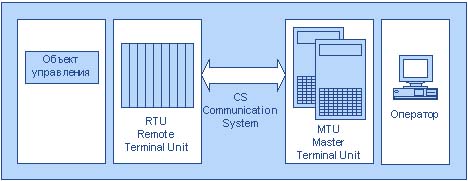
Рис. 2. Основные структурные компоненты SCADA-системыГлавной тенденцией развития MTU (диспетчерских пунктов управления) является переход большинства разработчиков SCADA-систем на архитектуру клиент-сервер, состоящую из 4-х функциональных компонентов.
1. User (Operator) Interface (интерфейс пользователя/оператора) исключительно важная составляющая систем SCADA. Для нее характерны
а) стандартизация интерфейса пользователя вокруг нескольких платформ;
б) все более возрастающее влияние Windows NT;
в) использование стандартного графического интерфейса пользователя (GUI);
г) технологии объектно-ориентированного программирования: DDE, OLE, Active X, OPC (OLE for Process Control), DCOM;
д) стандартные средства разработки приложений, наиболее популярные среди которых, Visual Basic for Applications (VBA), Visual C++;
е) появление коммерческих вариантов программного обеспечения класса SCADA/MMI для широкого спектра задач. Объектная независимость позволяет интерфейсу пользователя представлять виртуальные объекты, созданные другими системами. Результат расширение возможностей по оптимизации HMI-интерфейса.
2. Data Management (управление данными) - отход от узкоспециализированных баз данных в сторону поддержки большинства корпоративных реляционных баз данных (Microsoft SQL, Oracle). Функции управления данными и генерации отчетов осуществляются стандартными средствами SQL, 4GL; эта независимость данных изолирует функции доступа и управления данными от целевых задач SCADA, что позволяет легко разрабатывать дополнительные приложения по анализу и управлению данными.
3. Networking & Services (сети и службы) - переход к использованию стандартных сетевых технологий и протоколов. Службы сетевого управления, защиты и управления доступом, мониторинга транзакций, передачи почтовых сообщений, сканирования доступных ресурсов (процессов) могут выполняться независимо от кода целевой программы SCADA, разработанной другим вендором.
4. Real-Time Services (службы реального времени) - освобождение MTU от нагрузки перечисленных выше компонентов дает возможность сконцентрироваться на требованиях производительности для задач реального и квази-реального времени. Данные службы представляют собой быстродействующие процессоры, которые управляют обменом информацией с RTU и SCADA-процессами, осуществляют управление резидентной частью базы данных, оповещение о событиях, выполняют действия по управлению системой, передачу информации о событиях на интерфейс пользователя (оператора).
[ http://www.mka.ru/?p=41524]Тематики
Синонимы
EN
Русско-английский словарь нормативно-технической терминологии > диспетчерский пункт управления (в SCADA)
См. также в других словарях:
Master Data Management — In computing, master data management (MDM) comprises a set of processes and tools that consistently defines and manages the non transactional data entities of an organization (also called reference data). MDM has the objective of providing… … Wikipedia
Microsoft SQL Server Master Data Services — is a Master Data Management (MDM) product from Microsoft, which will ship as a part of the Microsoft SQL Server database.[1] Originally code named Bulldog, Master Data Services is the rebranding of the Stratature MDM product titled +EDM, which… … Wikipedia
Data integration — involves combining data residing in different sources and providing users with a unified view of these data.[1] This process becomes significant in a variety of situations, which include both commercial (when two similar companies need to merge… … Wikipedia
Data warehouse — Overview In computing, a data warehouse (DW) is a database used for reporting and analysis. The data stored in the warehouse is uploaded from the operational systems. The data may pass through an operational data store for additional operations… … Wikipedia
Data management — comprises all the disciplines related to managing data as a valuable resource. Contents 1 Overview 2 Topics in Data Management 3 Body Of Knowledge 4 Usage … Wikipedia
Data stream mining — is the process of extracting knowledge structures from continuous, rapid data records. A data stream is an ordered sequence of instances that in many applications of data stream mining can be read only once or a small number of times using… … Wikipedia
Data recovery — is the process of salvaging data from damaged, failed, corrupted, or inaccessible secondary storage media when it cannot be accessed normally. Often the data are being salvaged from storage media such as internal or external hard disk drives,… … Wikipedia
Master Tracks Pro — MTPro Master Tracks Pro 6.8.3 running on Windows 7 Developer(s) GVox … Wikipedia
Data file — A data file is a computer file which stores data to use by a computer application or system. It generally does not refer to files that contain instructions or code to be executed (typically called program files), or to files which define the… … Wikipedia
Data Protection API — DPAPI (Data Protection Application Programming Interface) is a simple cryptographic application programming interface available as a built in component in Windows 2000 and later versions of Microsoft Windows operating systems. In theory the Data… … Wikipedia
Data protection API — DPAPI (Data Protection Application Programming Interface) is a simple cryptographic application programming interface available as a built in component in Windows 2000 and later versions of Microsoft Windows operating systems. In theory the Data… … Wikipedia
